Simple ou compliqué de comprendre ?… est-ce réellement à la portée de si peu…
Ici, je ne traduis pas, car j’aime la simplicité et la beauté de cette langue.
Knowledge is another form of possession, and the man of knowledge is satisfied with it; for him it is an end in itself. He has a feeling—at least this one had*—that knowledge will somehow solve our problems if only it can be spread, thick or thin, around the world. It is much more difficult for the man of knowledge to be free from his possessions than for the man of wealth. It is strange how easily knowledge takes the place of understanding and wisdom. If we have information about things, we think we understand; we think that knowing or being informed about the cause of a problem will make it non-existent. We search for the cause of our problems, and this very search is the postponement of understanding. Most of us know the cause; the cause of hate is not very deeply hidden, but in looking for the cause we can still enjoy its effects. We are concerned with the reconciliation of effects, and not with the understanding of the total process. Most of us are attached to our problems, without them we would be lost; problems give us something to do, and the activities of the problem fill our lives. We are the problem and its activities.
J. Krishnamurti, Commentaries on Living, Harper & Brothers, New York, 1956
* Il parle d’un homme âgé, grand intellectuel, venu discuter avec lui.
Mais pourquoi donc Monet vient-il maintenant à ma rencontre ?
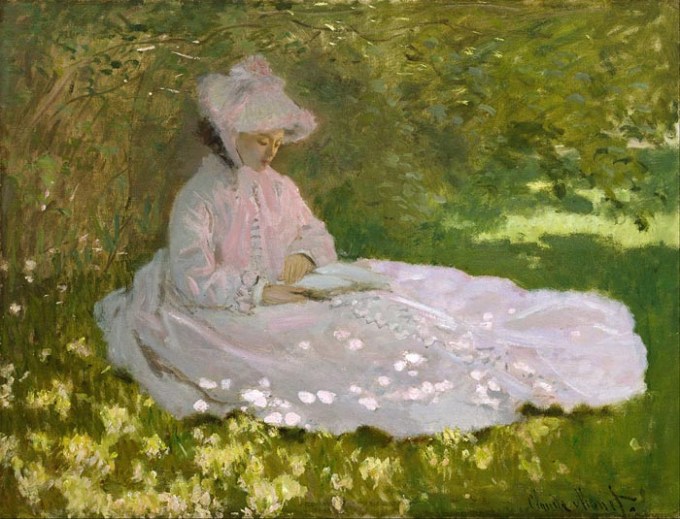
Claude Monet, Printemps, 1872
 nuit et jour